

Olympic-level Conspiracy
Charlotte Zhang on her new film, Tycoon.

Charlotte Zhang’s docu-fiction of contemporary and prospective Los Angeles, Tycoon, contends with events both real and imagined, intimate and global. In it we follow Lito and Jay (Miguel Padilla-Juarez and Jon Lawrence Reyes), two grifters always hunting for their next score. Theirs is a story of conspiracy and care, hoisted up and shattered just like Los Angeles, which, in Zhang’s imagination, is a city of pent-up rage and political corruption thanks to a devastating livestock crisis in the lead up to the 2028 Olympics.
Tycoon defied most filmic references I could think of. To me, it was reminiscent of Gary Indiana’s truish-crime novel, Resentment. Surveying every strata of Los Angeles society, from criminal underworlds to the cultural establishment, Indiana alights upon the same details and observations as Zhang: the desperate among us gamble big, the biggest among us consolidate power, and the rest scurry about like cockroaches trying not to get squashed. Told in conjunction, the stories of Lito and Jay’s survival and shadowy government corruption run amok reveal Zhang as an astute synthesizer of the moment, whose relative youth neither overstates her anger nor undercuts her analysis.
Ahead of Tycoon’s U.S. premiere on March 7th at Doc Fortnight in New York, I spoke with Zhang about, among other things, the blurred lines between documentary and fiction, conspiracies, and our complicated relationship to the Olympics.
In our earlier correspondence I got caught doing exactly the thing that happens when you’re watching a film that intentionally screws with familiar film grammars, in that I took what I was seeing about Miguel and Jon Lawrence, your actors, at face value, interpreting their performances as their real life. I’m curious what your thinking is ahead of showing Tycoon at a documentary festival where, maybe, that could happen more and more.
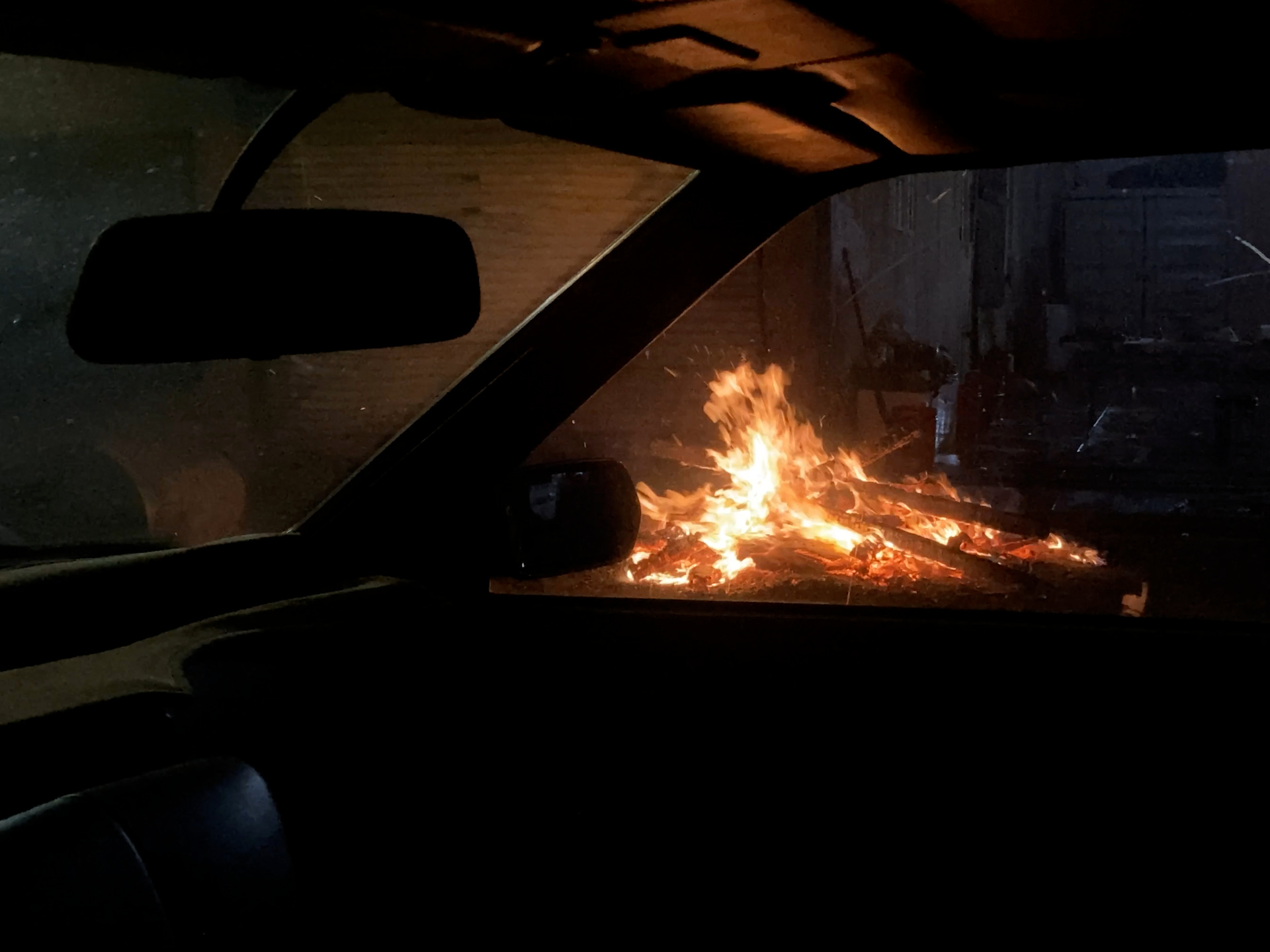
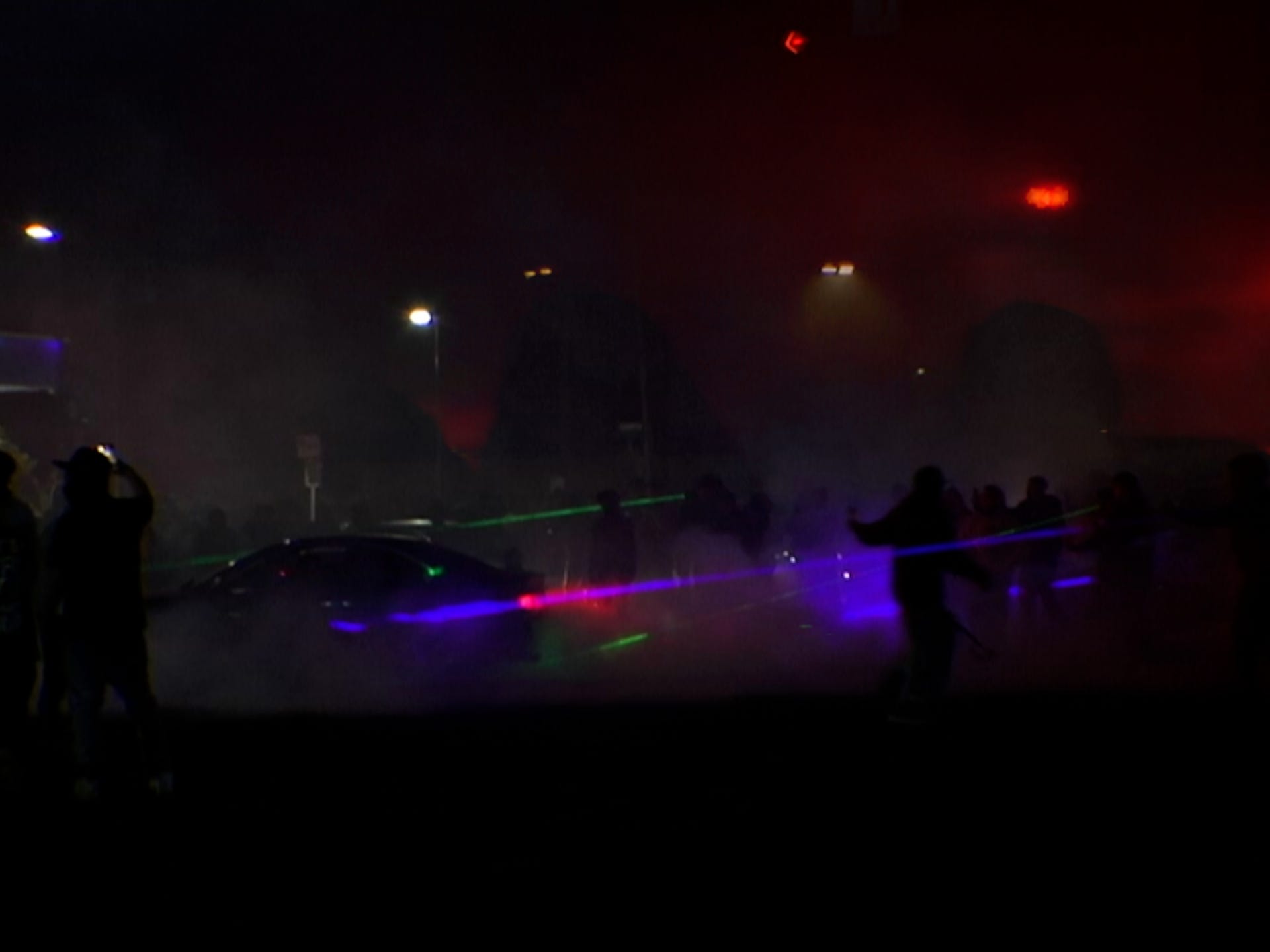
Charlotte Zhang: Oh, totally, yeah. I mean, I don’t blame you at all. It’s not an unfair assumption, for sure, but I’m interested in being in that zone of tension, because so much of Tycoon is scripted, it is a narrative film. But then things also just happened, and I just filmed them. You have footage of the fires in LA and you have footage of sideshows (unauthorized drifting exhibitions in the streets). Obviously, I didn’t orchestrate those things. I think I also wanted to be selective about what documentary context that I would show the film in. With Doc Fortnight, they do have a lot of hybrid and experimental work, so I was interested in the film being there.
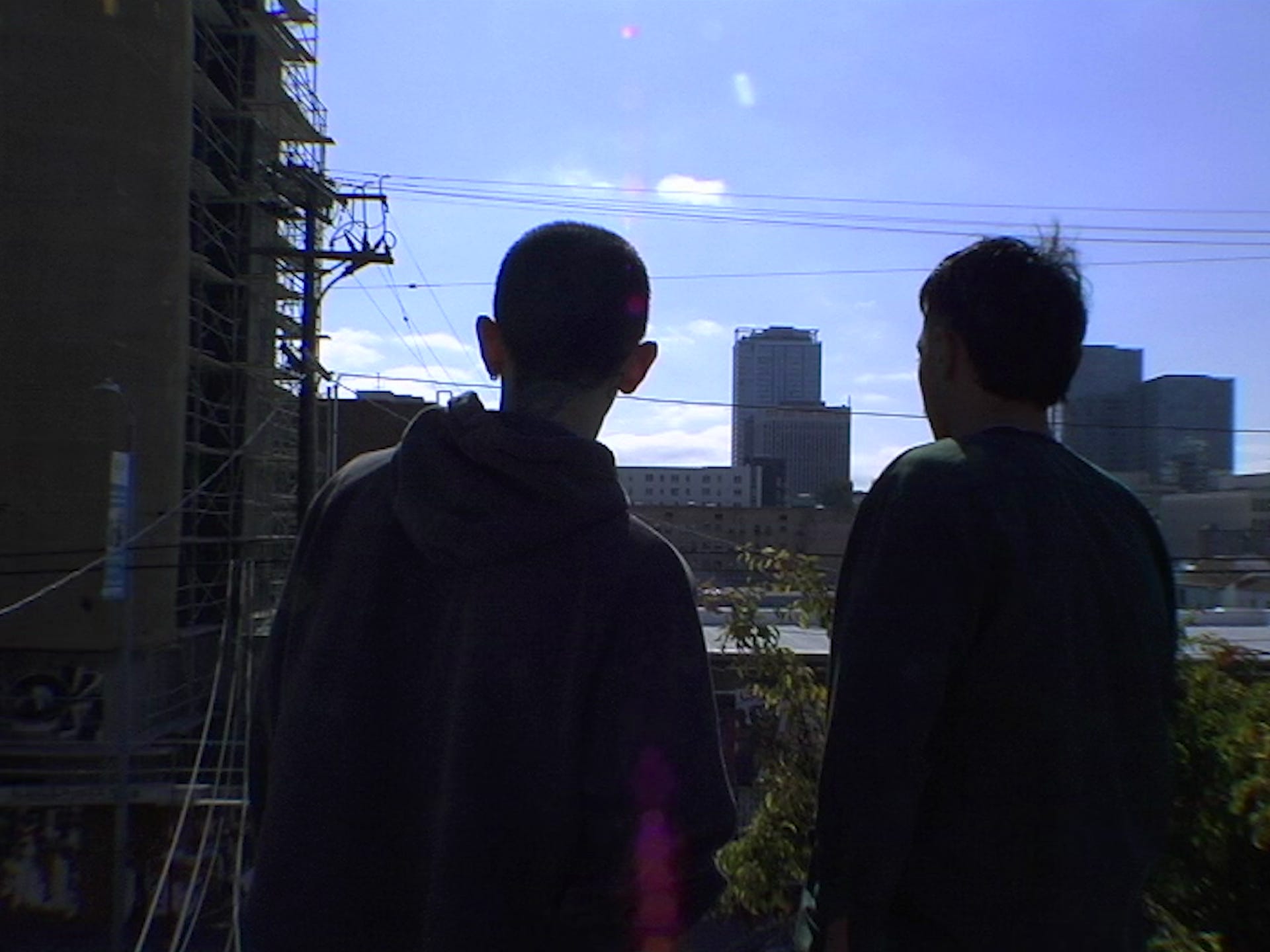
But at the same time, I think it’s easy for films by and about people of color, especially young people of color, to be considered portrayals of this constant, authentic anthropological subject. You’re always presenting some sort of vaunted authenticity, and I think that can be really reductive, and denies people the agency, the right to fiction, the right to invent. Everyone in the film, except for one voice actor, I think, is a non-professional actor. So, they memorized scripts, and they delivered based on my direction. There are aspects of their personalities or the way they would deliver language that are in the film, but at the same time it was about invoking people that they knew or recognized, rather than playing themselves. In that way, by not giving too much of yourself to the film, I think you gain that agency and that right to perform. Everybody is in on the joke, you know? So, I do want to be selective, out of respect for all the work that my collaborators put in. But at the same time, I think it will be interesting to play in this context.
I got the sense while watching that you made this film in the pockets of your real life, in that you were making it on weekends, in your spare time, and it seemed like you were catching scraps of interesting images as you encountered them, along with the scripted elements. In your press notes you mention Charles Burnett’s Killers of Sheep being a kind of model for you, production-wise. Can you speak a little bit more about that and how this film, in terms of production, fit into your life?
Charlotte Zhang: I had no work life balance because I got a very small amount of grant money and a little bit of funding from this gallery that I was showing at to make the film. And so with that amount, the weekend shooting method was the only way that making the film was possible with the collaborators I wanted to work with, because everybody has jobs, some people have school. And to save money -- and also because I was interested in trying to do all these different roles in a film -- I ended up doing pretty much everything. So, it consumed my life.
I was so excited to make the film, so I just started shooting. In between shoots, I would be organizing the next location and the next set, or making the props, which you can probably tell I made myself [laughs]. We shot on different days, but Sunday was usually the most consistent day we would have off. I found that interesting, because Sundays are also when a lot of sideshows happen, and the Art Laboe Show on the radio in LA, which we spoof a bit with the radio dedication and some of the oldies that play on the soundtrack -- some of which I heard for the first time on the Art Laboe Show. I think in that way, even though the flow of the film is a little bit hard to grasp, those two elements become a way of marking time.
Do you find that kind of all-consuming environment, whether it’s like a physical environment or like a mental one, to be really generative for you?
Charlotte Zhang: Yeah, definitely. For example, I even edited part of this film in the car shop that you see in some scenes which is run by my friend Kenneth, who’s also a co-producer. I was spending so much time in that car shop because it became the studio where I was fabricating some of the props, too. And a lot of the other locations in the film are kind of within the vicinity of that car shop, like friends’ backyards, the rooftop that’s connected to a friend’s studio, things like that. I think when you encase yourself in those environments, what it smells like, what it sounds like, all of those things end up working their way into the rhythms of the film. I think that’s why there’s a very sensorial aspect to the sound design and the way the images are cut with one another.
Can you talk about some of your key collaborators, Miguel and John Lawrence, and then maybe your producers as well? How did you meet them and what prompted the idea of working together on this project?
Charlotte Zhang: They were all friends I had beforehand. I was friends with Jon’s older brother first, who was a co-worker of Kenneth. Kenneth is one of my closest friends that I met when we were at CalArts together, and he became a custom car builder after school. His producer role is really interesting. When I told him we got into Rotterdam, he was like, “Oh, I have to look up what a film producer actually does”, because the way that he was producing the film was, I think, the base definition of what a producer should be, which is providing locations, providing tutorials or support with fabricating these props, providing ideas for making certain scenes possible to film, a lot of in kind support, right? I met Miguel at work. He’s pursuing architecture now, which is really cool. But everybody, all three of them, are, like, also, kind of car enthusiasts in their own way, so it was fun to have so much of that in the film.
But nobody is really deeply involved in the film industry. I just approached them because I thought they had a disposition that would suit the characters. I wrote a complete script, but it was a really malleable, porous document, because I always meant for the film to be able to shift and exist as this patchwork of ideas. I would write and rewrite new scenes and cut certain scenes as I was shooting. I was really surprised that everybody was down, and I was really proud, too, because I think it’s a common thing to say when working with non-professional actors, that they’ll sort of disappear mid-shoot. But everybody showed up to every shoot, lines memorized. It was just such a joy to work with them. It’s nice to be able to work with friends and be able to maintain those friendships afterwards. It was a serene set, a really fun set.
How long, or over how many weekends was the shoot? What was this kind of commitment?
Charlotte Zhang: Over the course of about a year I think it ended up being 25 to 30 shoot days. And not all of those included actors. Sometimes it would be just about getting shots. But I like to keep the shoot days short. Especially with the actors, I wanted to run a very easy-going set, so most days it would be, maybe, six hours of work, with a long lunch. But some days would be, like, three hours or something.
You mentioned this earlier, but instead of trying to make something that was representational or “authentic”, you were trying to achieve a “sense”, whether it’s of the environment or the kinds of people you and your collaborators knew. How would you describe that sense, and how do you become alert to it?
Charlotte Zhang: The important thing for me was that it’s sensorial in such a way that it’s tied to history, to the occurrence of historical events, and the collective experience of those historical events. What it means for something horrific to be occurring in the city, whether rapidly or very slowly, and what that sense of collective dread feels like, is, I think, difficult to logically substantiate. I needed to evoke those aspects in a way that is also still tied to concrete events. The genesis of some of that research was actually because I live in an area that was affected by the ‘92 uprising, and I became really obsessed with asking anybody around me who was here in the 90s what that experience was like, and just getting those anecdotal histories. What was really striking to me was all of the direct connections between the consequences of the ‘84 Olympics that set the stage for ‘92. I wanted to pull all of these histories together and layer them in a way that was not just evidentiary, but also experiential.
I think this is a good time to talk about Celebration Capitalism. I hadn’t heard of the term before reading some of the background info on your film. If you can, could you briefly explain it?
Charlotte Zhang: I’ll try. I like Jules Boycoff’s (author of Celebration Capitalism, 2013) writing because it is so direct. He kind of explains it as a parallel to disaster capitalism to create these states of exception to privatize public functions, to displace, to militarize the police and maximize these carceral elements of the state. I was drawn to it because, in general, I’m interested in the idea of celebration and punishment going hand-in-hand, that there are authorized and unauthorized forms of celebration. In LA, you get to witness a lot of unauthorized celebrations that are cruelly and violently shut down and policed. But the spontaneity of being in a mass of people is really interesting to me.
I was struck by how much Tycoon feels like it’s not necessarily a reflection of either Disaster Capitalism or Celebration Capitalism but actually a depiction of what it’s like to live stuck right in the middle of them. I wonder if there’s an apt name for what it means to live right in the middle of that.
Charlotte Zhang: There’s a real legacy in LA of being caught in between a figure that orchestrates or is able to profit from both. The prime example is a figure I became interested in during my research period, a guy named Peter Uberroth. Basically, he was the chair of the ‘84 Olympics Organising Committee, but then he was also the head of the Rebuild Los Angeles venture after the ‘92 uprising, which was a complete failure, like, really quite devastating. It privatized a lot of public functions, none of its promises were met. So he’s a figure who was able to distinctly profit from celebration and disaster capitalism. But I was interested in this idea of what it means to romanticize your own dispossession, as somebody who becomes collateral damage in these events, but who also still has these sort of aspirational figures in the form of CEOs.
Hustle culture.
Charlotte Zhang: Yeah, like the grindset shit, which feels transgressive to people because it feels like the mythology of the underdog or something, but it is still about romanticizing your own dispossession. There’s a post that’s like: “I told my landlord to raise my rent so I could grind harder,” [laughs]. That way of coping, that way of channeling ambitions or motivations.
The flip side of that is like romanticizing the idea of the Outlaw.
Charlotte Zhang: Yeah, true.
It feels central to both Lito and Jay’s view of themselves. But then you also have the made-up CEO of Ootheca who refers to himself as a modern-day Pablo Escobar. It seems like this feeds into your interest in fucking with film grammar and genre. Does that resonate?
Charlotte Zhang: Oh, totally. There’s this mutual subsumption that’s happening. This idea of a bandit or cowboy-esque figure, especially in the West, as somebody who both produces the nation, but is also crushed by it. I didn’t read Eric Hobsbawm’s book Bandits until after I had finished the film, but I really love that text, because he dives into the proximity to political movements, but the ultimate ambivalence, of these figures. In times of political turmoil, in times of exceptional violence, I think collectively, as a form of catharsis, we seek a violent avenger who is able to fulfill these fantasies for us. That’s sort of what Dark Woke discourse goes back to, that Hobsbawmiam bandit figure.
Even though I think the film veers on the side of being too explicit about its own politics, I did want to have characters that were ambivalent in their own politics, who are caught in these conspiracies because they have no choice. That was more interesting to me to explore. But with film grammars themselves, I don’t think there was a particular genre that I was attempting to rebel against. I was interested in absorbing those into the film itself. I really like music that will take, for example, these Wall of Sound, ‘60s girl groups, and then fuck with those techniques or chord progressions and integrate them into something with different instrumentation.
I found it kind of funny which films that would come up in writing about the film, because some of the references made sense. I guess there are these coming-of-age, neorealist elements or something. But it did make me wonder what that meant, because the references I was most interested in explicitly pulling from are maybe not so visible or graspable.
It was really exciting to not have to not feel like I was being led by the hand through your own filmic references.
Charlotte Zhang: I always hate to see just a direct reference via image rather than structure. A huge influence on the editing process was Ermanno Olmi’s The Fiances. There are certain scenes, like the one where the two Chinese spies are in the car and the city is passing by in these snippets of movement flying outside of the window. I’d even mapped out scenes just to study the way it was moving, because it was so fluid. There’s this one cut in it that I kept thinking about when I was editing where there’s this piano song playing in the beginning, and then using the texture of that to cut to these sparks flying as a man is welding. That type of really revelatory editing was what I was interested in. Also, I Come With The Rain -- what’s the director’s name? He made The Scent of Green Papaya --
Trần Anh Hùng?
Charlotte Zhang: Yeah! I think it’s so misunderstood. He’s working with these filmic archetypes, and they end up eating away at the plot until they swallow it whole. I really loved that it wasn’t so coherent in the way that you might want it to be. I also wasn’t interested in that kind of coherence. I always forget film plots first, anyways.
I’d love to talk about conspiracy now. I’m interested in the possibilities of conspiracy from a progressive politics standpoint. I wonder if, maybe, the Left just needs to get in on conspiracy a little bit more.
Charlotte Zhang: We need to buy in [laughs]
If anything, the last two months have really shown the world that the conspiracies are out there, and people are right about them. Like all the Epstein files shit. It’s like, oh yeah there was way more than a kernel of truth there.
Charlotte Zhang: It’s almost like that Qanon show where these certain conspiracies or histories are sort of fictionalized. Sometimes it’s about speculating about the possibility of something happening that has already happened or is happening to a group of people. And that kind of flattening into metaphor is so dangerous too.
I’m curious what your own personal relationship to conspiracy is. How are you feeling about conspiracies right now? I mean, clearly it’s on your mind to some extent. But I’m curious if it isn’t just limited to the big things like the Epstein files, and actually figures into the day to day.
Charlotte Zhang: My parents have a really healthy political cynicism or suspicion and that’s also part of my personality. I remember this guy I used to hang out with before work, who said something like, “Average Americans believe in and are invested in conspiracy like no other people I’ve encountered”. I’ve talked to strangers for 10 or 15 minutes, and then suddenly we’re talking about conspiracies, large and small, some really fantastical and some just mundane, about living in LA and that the city government has always been so corrupt, and the City Council continues to be corrupt, things like that. I also think about the casualness with which people hold this kind of knowledge. Remember the Boeing whistleblower? It just dropped out of the news cycle. But I think there’s this defeatist attitude where everybody knows, but there’s such a sense of helplessness about it that they just move on. Publicizing the realities of a particular conspiracy, or just releasing that information is no longer tenable as any sort of action, because nothing is done about it. Living with that kind of dissonance every day is interesting to me.
Do you personally not feel helpless about it? I ask because Tycoon, to me, is not a defeatist film. You’ve talked about wanting to push against a certain cynicism you see in other experimental films that, as you called it, are replicating the Doomscroll -- which I thought was a really interesting way of looking at it. But I find something a little hopeful in Tycoon.
Charlotte Zhang: For sure, yeah.
Is that reflective of your own feelings about the world right now?
Charlotte Zhang: I’m in this sort of shifting space. I’ll probably read this back and be like, “Damn. What the fuck, I said that?” But in this moment, I wouldn’t call myself an optimist. Tycoon both ends on a hopeful note and doesn’t, in that, similar to a whistleblower, there’s this release of information that nothing concrete is done about. But then it ends on this unauthorized, celebratory, explosive moment. I’m interested in the potential of these unscripted -- proto-political is not quite the right word -- but the these more ambivalent gestures that occur collectively, that feel spontaneous in some way, that are seeking collective catharsis, especially in a moment and from people who are very much subjugated. We’re in this constant cycle of aggressive movements being destroyed and then absorbed into so-called “authorized politics”, and then moving back out. In LA there’s a lot of really strong grassroots organizing because the city offers people so little support. I think that is really moving to see and also moving to see happen organically, amongst regular people. I’m absolutely not an optimist, but I am curious how things will evolve and change.
I loved the way you filmed the drifting exhibitions, or sideshows. There’s ambivalence in those scenes, because at some points they’re balletic and graceful and hypnotizing, but at other points they feel raw and charged with unpredictability. I’m curious what your firsthand impressions of those events were like, and how you thought about playing with our impressions of them in the film?
Charlotte Zhang: It’s really interesting. I don’t want to blow up their spot because I’m not super involved in that scene, and it’s such an underground scene. But I do find it alarming that a lot of these images of sideshows are disseminated as a racist display of so-called Urban Decay, because most of the people at sideshows are young and not white, especially in LA. They are very ambivalent events. There are things that happen that are quite tragic, but at the same I find them visually and sonically stunning. I love to go to them. I love that I got to be there. One of my friends who is involved in the scene took me around, because you kind of have to be in the know to know where things are happening. And so I was very grateful for that.
It’s certainly nice to see really young people, from whatever angle, with a healthy disdain for the police, who are always attempting to break up these shows. Because they are so criminalized, they’ve raised the stakes so dramatically for people who attend, or people who even happen to come across them and spectate. And I think it was about not just capturing this iconic imagery, but also integrating it within the structural logic of the film, with the motion of drifting itself. I wanted to structure the film like interlocking rings, which is reflected in the Olympics logo, and what’s left on the pavement after the cars are done drifting, and the references to Gyges’ ring -- all these references to circularity that move in and out of the film.
I hadn’t heard of Gyges’ ring before, but when I read about it I was like, “Oh, it’s the One Ring from Lord of the Rings.” Of course that must be touchstone mythology. So, what’s your interest in it, and – I don’t know if this is too big a question – but what, if anything, can be done invisibly these days?
Charlotte Zhang: That’s a good one. You know what’s so funny, I didn’t know about it until it was referenced in this essay I was reading about gated communities and surveillance. I was interested in the version that appears in Plato’s The Republic that Glaucon tells. It’s supposed to be this story about trying to come to terms with some idea of ethics and whether or not someone will be just if there are no consequences for any of their actions. But I also found it interesting as this tale of aspiration, similar to Barry Lyndon, or Jay’s character, who’s pursuing this relationship with a rich girl.
In terms of whether or not anything can still be invisible...that’s a really good question. The right to invisibility is denied everybody but the -- “powers that be” is such an outdated term, but you know what I mean. Invisibility is granted to these repressive presences in society but not to anybody else. I think the characters in Tycoon are constantly seeking this kind of invisibility, and there are all these almost gags about the things that they’re trying to do to evade being seen.
This is a bit tangentially related, but I do think a lot about this phrasing that was a bit more popular a few years back, about being from a marginalized community, or being racially legible in some way, and the concept of “feeling seen,” a sort of sentimentalist attitude about what it means to be accepted in legitimate society. I always hated that phrase. And it also loops back to when we were talking about being an authentic subject, and the right to fiction. To be seen and to be a constant representative of a particular image of yourself that is circulated in the world, and then to have characters that are specifically not trying to be seen in a number of ways, to not be legible, to not be witnessed in a concrete way. It’s like that joke one of the characters makes: “Maybe you should smile all the time if these cameras can pick up on suspicious expressions,” and performing a kind of subterfuge, like hiding in plain sight.
Very conspiratorial.
Charlotte Zhang: Yeah, very conspiratorial, very meta in a way, where the actors in the film, by performing, they’re also able to obfuscate the parts of themselves they wish to protect.
That’s a great way to pull a lot of the ideas we’ve been talking about together. A few more things. I’m kind of obsessed with the livestock crisis and insect protein storyline that acts as the counterpoint and background to Jay and Lito’s story. Where did that specific idea come from?
Charlotte Zhang: With the FDA, everything has become increasingly unregulated, so I feel like every few months there’s a new livestock virus, poultry virus. Things are always being pulled from shelves. It’s like, really haunting.
It feels like one of the more believable and imminent crises I’ve seen in a film. Better learn to like insects.
Charlotte Zhang: Oh, my God. I had this really crazy cockroach infestation, and was sort of trying to work through it by inventing these fictions so maybe I wouldn’t be so terrified when I moved cups in my apartment, you know? But also, the dissonance of being sold cockroach-based foods, while also living with the cockroach infestation, I think that aspect was interesting. I also found an article about scientists who had made cockroach flour and baked this bread that was very high in protein. I’m no entomologist, but what I think I ended up doing was this old-school tradition of using hissing cockroaches in the film, which are very different from German or American cockroaches. They’re very slow moving, they don’t carry diseases, and people keep them as pets. Actually, the insect handler in the film said, “I’ll do the film if I can keep the insects as pets after”. I was like, go right ahead, that’s awesome [laughs]. So there’s that unrealistic representation, I guess. But for the sake of the film I didn’t want to wade too deep and over explain that aspect of it.
So it was a combination of thinking about that dissonance, and the fact that a lot of cultures already eat insects. I think the white American consumer market is completely unfamiliar with this, and so they need these almost luxury, Whole Foods-ass items to be able to validate doing so, and to not feel degraded. Also with livestock, that just feels really imminent, but it’s also just really mundane, because you have to eat every day, it’s just something that happens in the background. I wanted these large scale, fictional historical events happening in the film to also just be in the background of these characters’ lives, as they’re trying to navigate it in ways that they feel are within their control.
The Olympics are top of mind, with the Winter Olympics just finished recently. I’m curious to what extent the upcoming LA Olympics weigh on the people you know, and what feels like might be coming up in terms of resistance to it.
Charlotte Zhang: There are organizations like NOlympics LA that are already doing a lot of organizing. There’s also the World Cup coming this year, which is just, frankly, psychotic. I don’t know what’s gonna happen with that. The thing is, they’re not going to cancel the Olympics despite the fact that the city has not even begun to recover from just the events of the last year or two. You see these images, every day, of the brutality of these ICE raids, the horror of that. And the security apparatus that is going to be brought in by the Olympics is only going to exacerbate that. And if these raids were not happening right now, they would absolutely still happen then, because of that multi-agency security strategy.
The lessons of the ‘84 Olympics were that the police were granted a lot of very fancy equipment, and they became hyper-militarized. They had this state of exception to rid the streets of undesirables through the creation of drug and gang task forces that really ravaged Black and Brown communities. Also, the socio-economic disparity that was already so extreme throughout the Reaganite ‘80s in LA just deepened within the scope of the ‘92 uprising.
The NOlympics website is really funny. They have a whole corruption dashboard with the different members of city council and other people involved in the organization of the Olympics that are doing what they’re doing, I guess. I do feel that intangible dread and tension. But that’s difficult to cite in terms of concrete events. It’s something that becomes a compressed history that you can only look back at, but being in it, it feels challenging to place in solid terms. But, I guess we’ll see what happens. I am very moved by a lot of the community organizing that happens in the city, but there is an awareness of its limits. They’ve been sweeping encampments and then not offering people resources since the fucking beginning. I’m sure that will only increase.
We don’t have to get into this too much, but with the Winter Olympics, these young athletes have had no choice but to become these symbolic avatars for their countries. Like, the two Asian girls, the figure skater and the skier, it is fascinating to be, like, 20 years old, do this sport, but at the same time, you’re caught in the matrices of really intense, conspiratorial conversations about relationships between countries, between governance. They become these engineered figures. I’m curious about what discourse this next Olympics will bring.
At the risk of being sentimental about the Olympics, I saw something on Twitter that spoke indirectly to how Alyssa Liu and Eileen Gu have had to become these politicians for two weeks, and what it means to represent America. The tweet said: It’s not that, when you’re an athlete, you represent the country and everyone who lives there; the ideal should be the inverse, that everyone who is at home gets to be represented by you, they become the athlete, rather than the athlete becomes them.
Charlotte Zhang: I’m not a connoisseur of sports, but I think they’re beautiful. I think Alysa Liyu’s performance in particular had such clear passion and ecstasy, which is really moving.
Her relationship to figure skating is its own political statement, which is really interesting.
Charlotte Zhang: I’m all about people doing things on their own terms. This film is all about doing things on my terms, whether or not that’s completely illogical to anybody else. I think the ability to choose that and to be able to come out of it with something is incredible.